

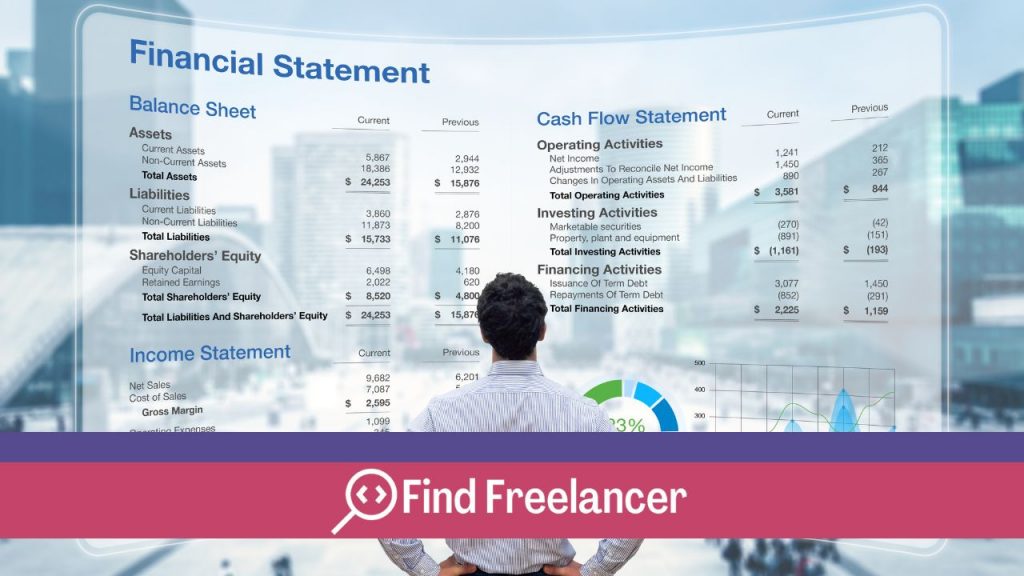
The balance sheet, the cornerstone of a company’s financial management, stands as an immutable dashboard, revealing an instant snapshot of its financial health. In this article, we delve into the intricacies of this crucial statement, revealing its nuances and relevance. The balance sheet, one of the three pillars of financial statements, transcends simple accounting to offer a profound vision of assets and liabilities. It presents itself as a snapshot at a precise moment in time, capturing the panorama of a company’s resources and obligations. In this exploration, we will detail the structure of the balance sheet, highlighting the subtle balance between assets and liabilities. In this way, we plunge into the fascinating world of the balance sheet, deciphering its financial language and revealing the keys to an enlightened interpretation of this masterpiece of business management.
.
What is a balance sheet?
The balance sheet, a fundamental element in the financial panorama of companies, is a key summary of their situation at a given point in time. It belongs to the three major financial statements and offers a concise view of a company’s economic health.
Definition
The balance sheet, the mainstay of the three essential financial statements, offers a snapshot of a company’s financial situation. At a given point in time, it shows liabilities and assets in a balanced manner. It is a snapshot prepared quarterly or annually by accountants, revealing the company’s financial health.
Structure of the balance sheet
A clear balance sheet pattern emerges with two fundamental pillars: assets and liabilities. Assets include fixed assets, inventories, receivables and cash, while liabilities include share capital, loans, trade payables and other liabilities. The balance between assets and liabilities is essential, reflecting the company’s financial strength.
What’s the difference between a balance sheet and an income statement ?
Although the balance sheet and income statement are instruments for assessing financial stability, their perspective and scope differ significantly. The balance sheet, like a snapshot, offers an immediate view of a company’s financial situation at a specific point in time. At time “t”, it balances debts (liabilities) with assets (assets), presenting a static snapshot of financial health.
In contrast, the income statement takes a dynamic approach, scrutinizing financial health over a longer time horizon, generally 3 to 5 years. It dissects revenues, expenses, profits, or losses over a given period, providing an evolving perspective. Unlike the balance sheet, the income statement focuses on long-term performance, enabling an in-depth assessment of financial trends and strategic projections. Thus, although complementary, these two financial documents offer distinct angles of vision for apprehending a company’s overall situation.
What does an accounting balance sheet consist of?
Structure
The balance sheet is presented as a two-column table, detailing Assets on the left and Liabilities on the right. This structure clarifies the list of items, allowing a quick understanding of the company’s financial health.
Elements
– Balance sheet assets
Assets include durable items (fixed assets) and those destined to disappear with each operating cycle (inventories, receivables, cash and cash equivalents). Their classification, from least to most liquid, is crucial.
Assets
…
– Balance sheet liabilities
Liabilities include permanent resources (shareholders’ equity, depreciation) and those destined to disappear (supplier debts, social debts). Priority in the display of liabilities is essential
.
A balance sheet : how important ?
The balance sheet is a clear window on a company’s assets. It shows whether these assets can be converted into cash to repay creditors when needed. The main elements of the balance sheet include cash, accounts receivable, and net worth.
Liquidity
The amount of available cash, cash equivalents and liquid assets, determines the ability to repay in case of need.
Accounts receivable
Effective management of accounts receivable guarantees a steady flow of cash and prevents late payments.
Reading a balance sheet
A careful reading of the balance sheet, executed from left to right and top to bottom, reveals the company’s net worth. This methodical approach provides a deep understanding of financial health by highlighting key elements.
An in-depth analysis can detect significant red flags. Insufficient cash on hand can indicate a fragile cash position, while high receivables signal a potential risk of non-payment. Old inventories suggest the need for a thorough review of inventory management. In addition, excessive dependence on financial partners can compromise the company’s autonomy.
In conclusion, the balance sheet is more than just a financial statement; it’s a powerful analytical tool. It acts as an essential guide to assessing a company’s financial health. Mastering its language means holding the keys to informed decision-making. In this way, expert reading of the balance sheet transcends the simple accounting exercise, offering a critical perspective to guide strategic choices towards a solid financial future.